 HEAD OFFICE :



Preventing the damage from blue light with astaxanthin
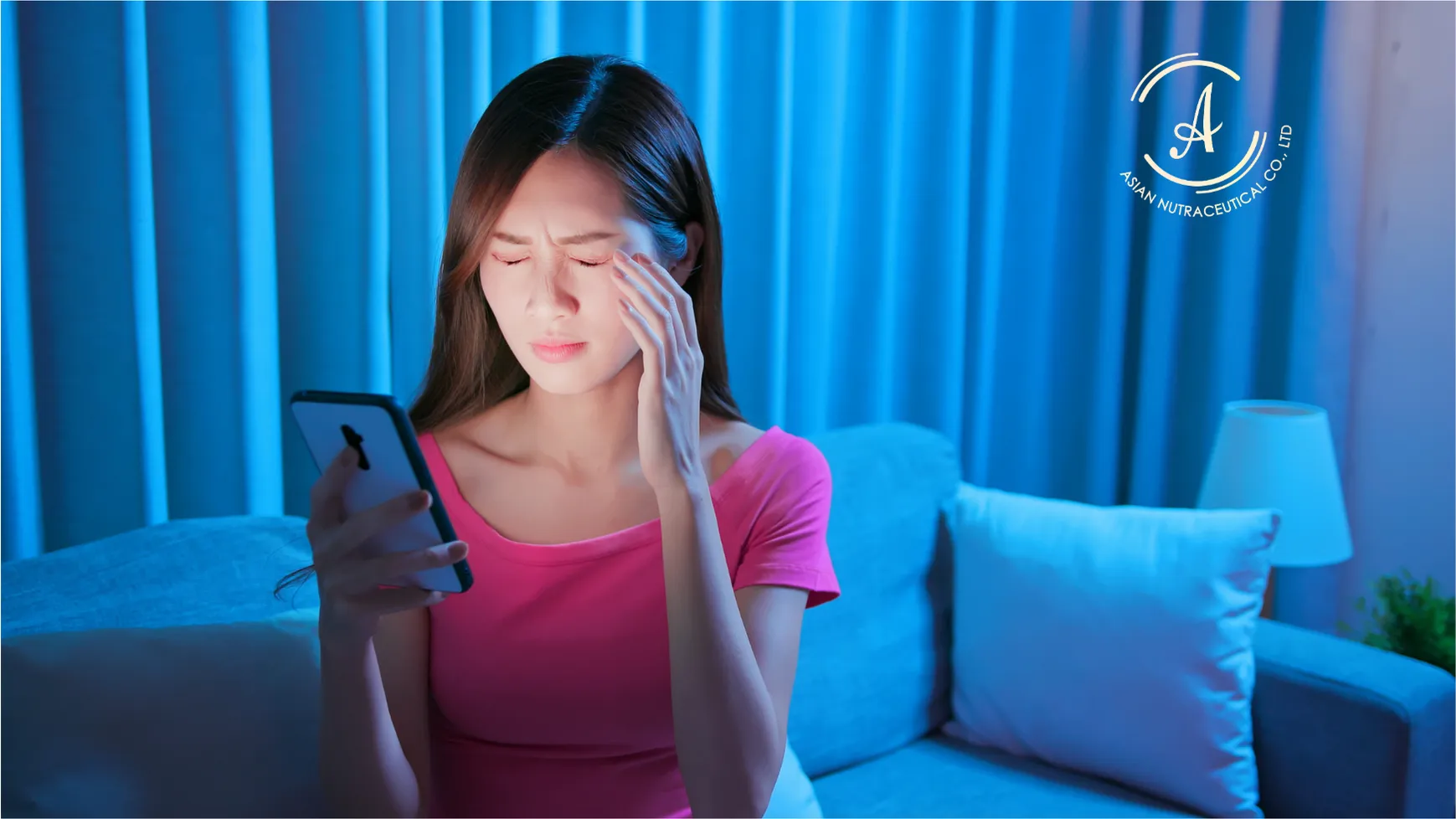
In the digital age, electronic devices such as smart phones and computers have become part of our daily lives. Communication devices are playing an increasingly important role in online learning or work from home. The light from the screen has a significant impact on eye health. When the convenience of technology is exchanged for lost health, it is caused by "blue light from the screen."
What is blue light ?
Blue light is ahigh-energy wave with a wavelength of 400 to 500 nanometers, which falls between blue and violet. It comes from various electronic devices, including mobile phone screens, computer screens, and television screens. There is also blue light from nature.
Blue light is as dangerous as ultraviolet rays (UV rays), which have both UVA and UVB wavelengths of 290 to 400 nanometers.
Harmful effects of blue light
Because blue light has high energy and can damage organs, when blue light is emitted from the screen, it will penetrate organs such as the eyes and skin, which will have many negative consequences.
Harmful effects of blue light
Because blue light has high energy and can damage organs, when blue light is emitted from the screen, it will penetrate organs such as the eyes and skin, which will have many negative consequences.
- Dry eyes Because of working through these electronic devices May accidentally look at the screen Makes blinking less, tears that coat the surface of the eye can evaporate. Resulting in dry eyes Irritation around the eyes, red eyes and conjunctivitis can occur.
- Computer Vision Syndrom (CVS) which is a group of uncomfortable symptoms when looking at a computer screen for a long time, such as eye pain, dry eyes, burning eyes, itching eyes, and pain in the eyeball.
- Age-related macular degeneration (AMD) Blue light from the phone stimulates the accumulation of antioxidants and causes retinal cells to become inflamed or degrade. There is research that blue light can increase the substance Lipofuscin that is caused by the breakdown of cells in the eyes. It is a cause of deterioration of the eyes.
Blue light causes skin damage
In addition to damaging the eyes, many people do not know that blue light from both computer screens and mobile phones can harm our skin in the same way as ultraviolet rays from sunlight, especially the skin on the face that is exposed to blue light directly.
Blue light can damage collagen and elastin in the skin structure, making the skin deteriorate, sagging, and stimulate the production of melanin, making the skin appear as freckles, dark spots, and lack of clarity.
That said, taking care of yourself from blue light is very important. especially to the eyes which is an important organ that is constantly exposed to blue light. To ensure that our eyes last a long time It starts with simple steps like adjusting your screen's brightness appropriately. Use blue light filter glasses And follow the 20-20-20 rule by taking a 20 second break looking out at a landscape or something 20 feet away every 20 minutes. Additionally, using skin care or sunscreen can help protect your skin from blue light as well
In addition to taking action to avoid the dangers of blue light, there are also dietary supplements that help care for the body from blue light.
Astaxanthin, a natural substance from red algae, is one of the most suitable nutrients for overall protection from blue light. With the highest antioxidant ability in nature, astaxanthin helps to prevent many harmful effects of blue light, such as:
Taking astaxanthin supplements can help prevent vision loss from computer work, especially in people aged ≥40. Astaxanthin can help reduce the damage caused by free radicals that occur from exposure to light at the screen.
Increase the stability of the tear film, repair the cells of the cornea and conjunctiva
Increase the speed of blood flow to the retina
Protect the skin fromblue light
Results from using astaxanthin
1.Reduce eye fatigue and increase eye accuracy when working on a computer screen for a long time
2.Helps to increase the stability of the tear film that keeps the eyes moist, thus reducing dry eye symptoms
3.Increase blood flow to the retina to keep the retina healthy
4.Protect the skin from wrinkles and dullness caused by blue light
Who is likely for using astaxanthin
1.People who work at the computer screen all the time
2.People who need help protecting their skin and eyes fromblue light
3.People who care for their eyes,skin,and want toimprove their overall health
[Reference]
1. Takahiro S, et al. Effects of diet containing astaxanthin on visual function in healthy individuals: a randomized, double-blind, placebo-controlled, parallel study. J Clin Biochem Nutr. 2023 Jan 1;72(1):74–81.
2. Tian L, et al. Benefits and Safety of Astaxanthin in the Treatment of Mild-To-Moderate Dry Eye Disease. FRONT NUTR. 2022 Jan 13;8.
3. Saito M, et al. Astaxanthin increases choroidal blood flow velocity. Graefes Arch. Clin. Exp. Ophthalmol. 2011 Nov 10;250(2):239–45.
4. Tominaga K, Hongo N, Fujishita M, Takahashi Y, Adachi Y. Protective effects of astaxanthin on skin deterioration. Journal of Clinical Biochemistry and Nutrition [Internet]. 2017 Jul 1 [cited 2021 Jul 30];61(1):33–9.